
Metal rulers are widely used across various industries, from carpentry and construction to engineering and arts. They provide precise measurements, durability, and stability, making them indispensable tools for professionals and DIY enthusiasts alike. Metal rulers come in a variety of designs, materials, and sizes to suit different tasks, offering a broad range of options for anyone who needs to measure or draw straight lines with high accuracy.
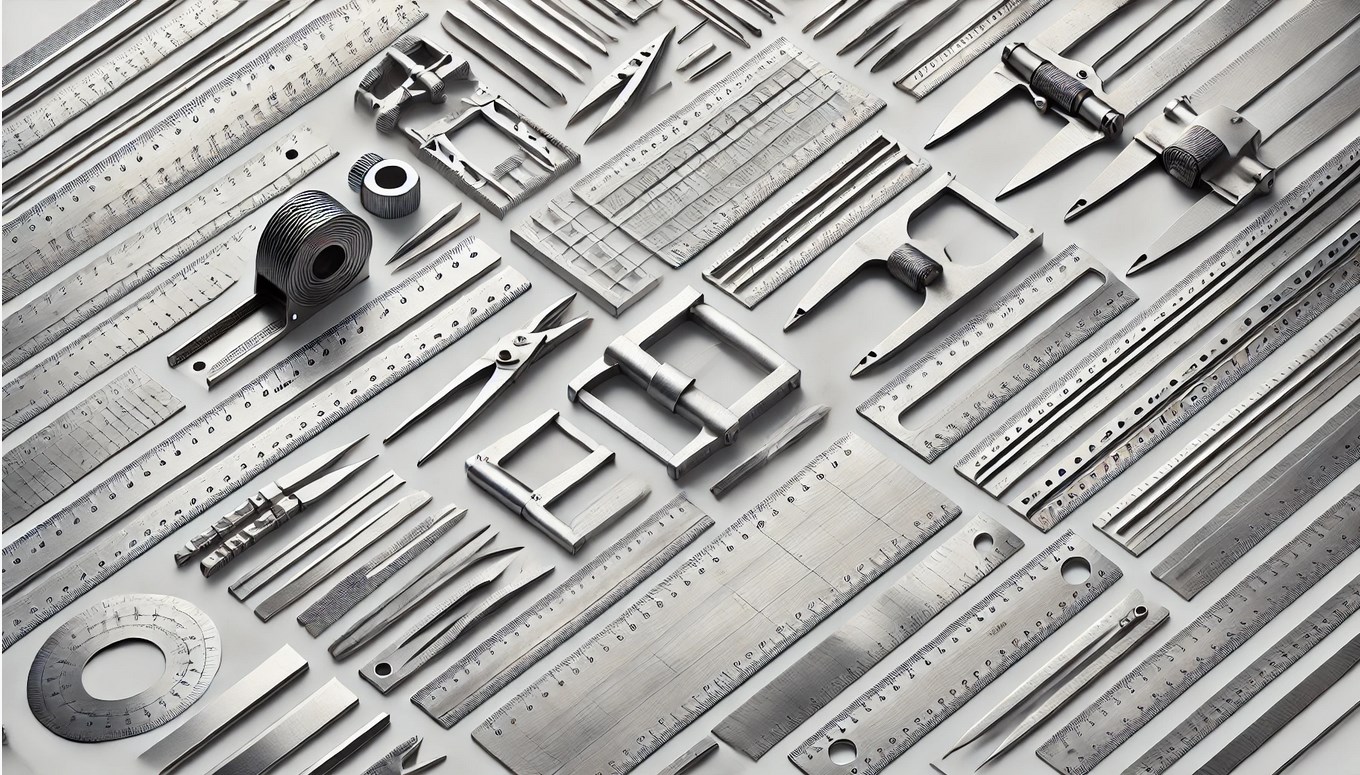
Steel Ruler
The steel ruler is one of the most common types of metal rulers, favored for its strength, durability, and precision. Made from stainless steel or carbon steel, these rulers are designed to withstand wear and tear in harsh environments. They are often used in schools, workshops, and industrial settings for measuring lengths, drawing lines, and performing detailed work.
Features of Steel Ruler:
- High Durability: Steel rulers are built to last and are resistant to bending, warping, or cracking, even with frequent use in tough environments.
- Accurate Markings: Steel rulers feature highly accurate and finely etched markings, often in both metric and imperial systems, ensuring precise measurements every time.
Steel rulers are essential in a wide range of applications, from basic measuring in the classroom to detailed work in construction, engineering, and technical drawing. Their durability and precision make them ideal for projects requiring reliability and accuracy.
Aluminum Ruler
Aluminum rulers offer a lightweight and corrosion-resistant alternative to steel rulers, making them easier to handle without compromising strength. These rulers are often used in tasks that require portability and ease of use, such as drawing, drafting, and light construction work.
Features of Aluminum Ruler:
- Lightweight Design: Aluminum rulers are much lighter than steel rulers, which makes them easier to carry and handle for long periods without fatigue.
- Rust-Resistant: Aluminum is naturally resistant to rust, making these rulers an excellent choice for environments with high humidity or exposure to moisture.
Aluminum rulers are commonly used in offices, schools, and design studios where portability is important. They are ideal for lighter tasks like drawing, drafting, or measuring objects in less demanding environments.
Stainless Steel Ruler
Stainless steel rulers are known for their resistance to corrosion, rust, and staining, making them a popular choice for both industrial and professional environments. These rulers combine the precision of metal rulers with the added benefit of being resistant to environmental elements, making them ideal for long-term use in both indoor and outdoor settings.
Features of Stainless Steel Ruler:
- Corrosion and Stain Resistant: Stainless steel rulers are highly resistant to rust and stains, even when exposed to water or other harsh chemicals.
- Smooth Surface: The smooth finish of stainless steel rulers ensures that measurements are accurate, as the surface remains free from bumps or imperfections that could affect precision.
Stainless steel rulers are widely used in industries like engineering, machining, and woodworking, where precision and durability are essential. These rulers are also ideal for laboratory and scientific use due to their resistance to corrosion and staining.
Folding Metal Ruler
Folding metal rulers, also known as folding rulers or carpenter’s rulers, are compact and portable tools that are made from metal and can be extended to different lengths. These rulers are often used in construction, carpentry, and various other trades for measuring and marking.
Features of Folding Metal Ruler:
- Portability: The folding design allows the ruler to be collapsed to a small, compact size for easy storage and transportation, making it ideal for on-the-go measurements.
- Multiple Sections: These rulers often consist of several linked sections that can be extended to various lengths, offering versatility in measuring long distances and tight spaces.
Folding metal rulers are commonly used by builders, carpenters, and construction workers who need a convenient and reliable measuring tool for measuring longer distances or accessing hard-to-reach areas.
Engineer’s Ruler
An engineer’s ruler is a specialized type of metal ruler designed for precise measuring and drawing in engineering, architecture, and other technical fields. These rulers often come with finer measurements and are used for detailed, high-accuracy tasks, making them indispensable in drafting and technical design.
Features of Engineer’s Ruler:
- High Precision: The markings on an engineer’s ruler are often in small divisions, such as 1/100th of an inch or millimeters, allowing for more detailed and precise measurements.
- Scaled Markings: Engineer’s rulers often include multiple scales, such as metric, imperial, and specialized scales like engineering scales, making them highly versatile for technical applications.
Engineer’s rulers are used in technical drawing, blueprint creation, and other engineering applications where precise measurements are critical. They are ideal for professionals in fields like architecture, mechanical engineering, and electronics.
Architect’s Ruler
The architect’s ruler is a specialized tool designed for use in architectural drawing and drafting. These rulers feature multiple scales that help architects create drawings to scale. Typically made of metal, these rulers offer high precision and are a staple in the architectural profession.
Features of Architect’s Ruler:
- Multiple Scale Markings: Architect’s rulers feature several scales, such as 1:10, 1:50, or 1:100, which are used for drafting detailed, to-scale architectural plans.
- Triangular Design: Architect’s rulers often have a triangular or multi-sided design to accommodate multiple scale measurements, making them more efficient for working with various drawing requirements.
Architect’s rulers are crucial for professionals in the field of architecture, urban planning, and civil engineering. They are used for designing, drawing floor plans, site plans, and other architectural projects that require accurate scaling.
Metric Metal Ruler
Metric metal rulers are specifically designed to measure lengths in the metric system. These rulers are marked with millimeters and centimeters, providing a precise and easy-to-read format for users who need metric measurements. They are commonly used in countries where the metric system is the standard, and in scientific, technical, and educational fields.
Features of Metric Metal Ruler:
- Metric Graduations: The ruler is marked with millimeters and centimeters, making it ideal for tasks that require precise metric measurements.
- Durable and Strong: Made from metal, these rulers are durable and resistant to damage, offering longevity even in harsh work environments.
Metric metal rulers are used in scientific labs, schools, and by professionals in fields like engineering, design, and construction, where metric measurements are standard. These rulers are perfect for anyone who requires precise and accurate metric measurements.
Precision Metal Ruler
Precision metal rulers are high-quality measuring tools that provide exceptional accuracy for tasks that require extremely fine measurements. They are commonly used in industries where precision is critical, such as machining, metalworking, and scientific research.
Features of Precision Metal Ruler:
- High Accuracy: These rulers are designed to provide the highest level of accuracy, often with very fine graduations (such as 1/100th of an inch or 0.1 mm).
- Sturdy Construction: Typically made from high-grade stainless steel or hardened metals, precision rulers are built to withstand repeated use without warping or bending.
Precision metal rulers are indispensable in tasks that require minute measurements, such as precision machining, fine metalworking, and high-end carpentry. They are also used in laboratories for detailed measurements in scientific research.
Combination Square Ruler
A combination square ruler is a versatile tool that combines the features of a ruler, protractor, and level in a single instrument. It is often made of metal, providing both durability and accuracy for a wide range of measuring and layout tasks.
Features of Combination Square Ruler:
- Multi-Functionality: A combination square includes a ruler, a protractor for measuring angles, and a level for checking flatness, making it a multi-use tool in construction and carpentry.
- Precision Measurements: The ruler is made of durable metal with precise markings, ensuring accurate measurements for professional tasks like framing, tiling, and layout work.
Combination square rulers are often used in construction, woodworking, and metalworking, where multiple measurements and layouts are required. They are especially useful for tasks such as framing, squaring edges, and setting angles.
Flexible Metal Ruler
Flexible metal rulers are made of thin, flexible strips of metal, usually stainless steel or aluminum, that can be bent slightly to follow curved surfaces. These rulers are ideal for measuring irregular or curved surfaces that are difficult to measure with a traditional straight-edge ruler.
Features of Flexible Metal Ruler:
- Flexible Design: The thin metal construction allows the ruler to bend and conform to the shape of the surface, making it suitable for measuring around curves or along irregular lines.
- Precise and Sturdy: While flexible, these rulers maintain a high degree of accuracy and are still sturdy enough to provide precise measurements even when bent.
Flexible metal rulers are frequently used in fields such as textiles, upholstery, and design, where accurate measurements of curved or irregular surfaces are required. They are also useful in any task that involves tracing or measuring along curves.
Drafting Metal Ruler
Drafting metal rulers are essential tools for anyone involved in technical drawing, architectural design, or graphic arts. These rulers are designed to be used with specific drafting tools and are marked with different scales to facilitate precise measurements and clean lines.
Features of Drafting Metal Ruler:
- Multiple Scales: Drafting metal rulers come with a range of scale markings, including architectural, engineering, and metric scales, to suit various types of drafting tasks.
- Straight Edge: They often feature a straight edge for drawing fine, straight lines without warping or bending, which is essential in professional drafting and design work.
Drafting metal rulers are mainly used in design studios, architectural firms, and technical drawing environments where precise, clean lines and accurate measurements are required for professional projects.
Etched Metal Ruler
Etched metal rulers feature engraved or etched markings that are carved directly into the metal surface. These rulers provide increased durability and permanence compared to printed or painted markings, ensuring that the measurements stay intact for the life of the ruler.
Features of Etched Metal Ruler:
- Permanent Markings: The etched markings are highly resistant to wear and tear, making them suitable for use in environments where rulers may be subject to rough handling or frequent use.
- Durability: Made from high-quality metal, these rulers are designed to withstand extensive use without fading or deteriorating over time.
Etched metal rulers are ideal for industrial and manufacturing environments where durability and longevity are required. They are commonly used in metalworking, engineering, and laboratory settings where high-precision measurement tools are essential.
T-Square Metal Ruler
A T-square metal ruler is a tool designed specifically for drawing perpendicular lines and measuring angles. Its T-shaped design makes it particularly useful in drafting, technical drawing, and construction, where square and precise lines are needed.
Features of T-Square Metal Ruler:
- T-Shape for Precision: The T-shaped structure allows for perfect alignment of the ruler against the edge of a surface, ensuring accurate perpendicular lines.
- Sturdy and Reliable: Made from durable metal, T-square rulers are designed to provide long-lasting reliability in drawing straight, even lines.
T-square metal rulers are commonly used in technical drawing, architecture, and graphic design. They are essential tools for anyone working with blueprints, drafts, or creating accurate technical diagrams and plans.